Bringing you one of the most richest and most important gastronomies in the world.
Mestizaje, not fusion
Lima has never cooked alone.
Its pantry is ancient. The potato was born in the Andes, and in Caral, the oldest city in the Americas, people were eating fish with corn five thousand years ago. Ají amarillo, rocoto and ají panca still form the base of the cooking.
Then other cooks arrived, and none of them left. Spain brought the lime that sets off a ceviche. Africa brought the embers of the anticucho. Canton brought the wok of chifa. Japan brought the fine cut of the tiradito. Each left a technique, not a menu. Over generations, those techniques stopped feeling foreign and became Lima's own.
That's why we say mestizaje, not fusion. Fusion brings two cuisines together to make something new. In Lima, these influences have been one cuisine for generations. They aren't additions. They're memory.
The three territories
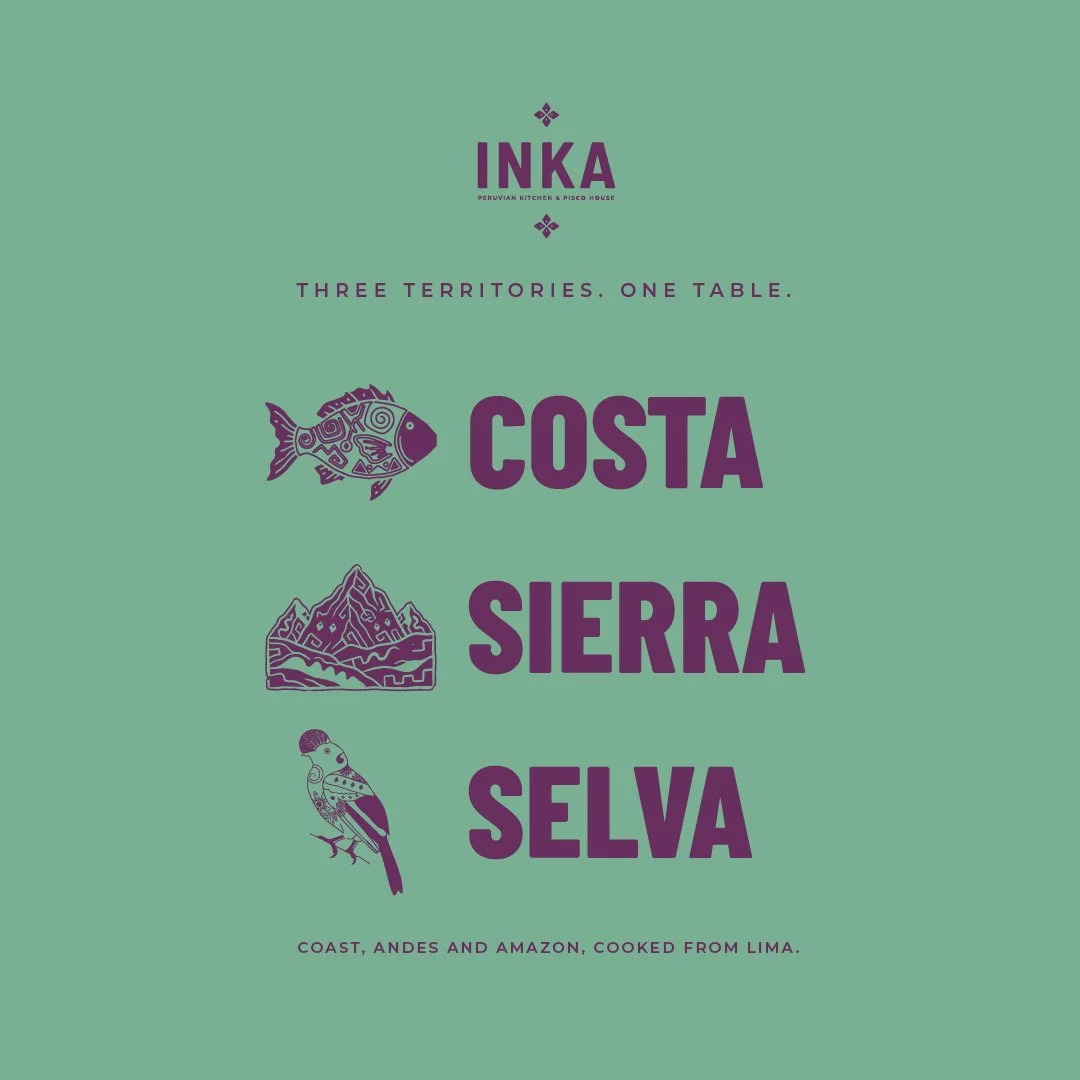
Costa. Sierra. Selva.
The kitchen draws from Peru's three great territories, and Lima is where they meet.
Costa (the coast): the sea, lime, freshness and leche de tigre.
Sierra (the Andes): potatoes, corn, quinoa and ajíes. Depth, smoke and memory.
Selva (the Amazon): fruit, herbs and botanicals. Aroma, energy and surprise.
COSTA The Coast
Fish, lime and the acid of ceviche. In Lima it’s the Pacific; here, the Gulf.
SIERRA The Andes
The ancient Andean pantry: potato, corn, quinoa and ají amarillo.
SELVA The Amazon
Wild fruit, ají charapita and the aromas of the rainforest.